Pakistan and Iran: Two brotherly nations
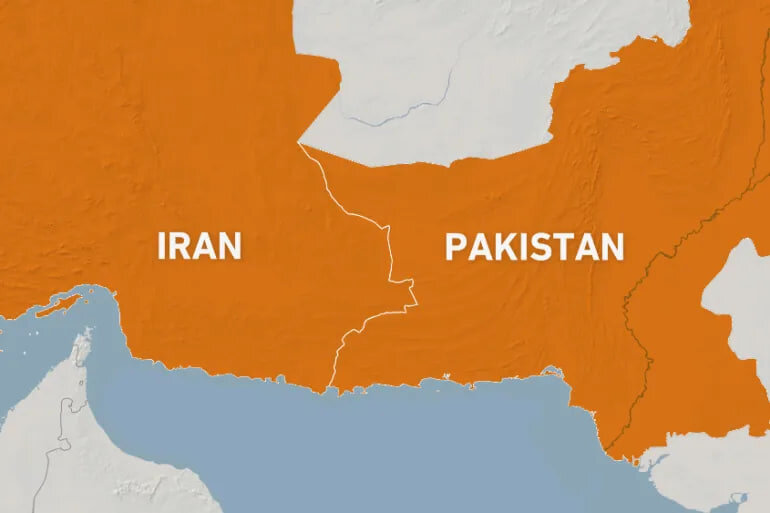
It is a great honor for Pakistan that, in these most difficult circumstances, Iran has trusted Pakistan to stop the U.S. war on the Islamic Republic. Along with the honor, this is also a great test for Pakistan, and every step has to be taken with gusto, because nations face difficult times in history. During this time, whoever supports them becomes a part of the memory of the nations.
The current atmosphere of trust between Pakistan and Iran is not sudden or a result of a series of successive events in the past few days. This amity is rooted in the relations between the two neighboring countries. Schoolchildren in Pakistan have read in textbooks that the first country in the world to recognize Pakistan in 1947 was our great neighboring brother country of Iran.
Similarly, this relationship came to the fore when Iran, under the direction of Ayatollah Ruhollah Khomeini (Imam Khomeini), led the Islamic Revolution in February 1979. The world was on edge and was ready to oppose it. But at that time, Pakistan became the first country to recognize the Islamic Republic of Iran and did not care about the opposition from the outside world. Immediately after the victory of the revolution, Pakistan's Foreign Minister Agha Shahi visited Iran in March 1979 and met with the highest Iranian officials, including Ayatollah Khomeini. The visit set the stage to push the relations to new levels. Iran's Islamic Revolution had been facing opposition from the Western world from the very beginning, but Pakistan did not notice the Western opposition. In April 1979, Pakistan's President General Zia issued a statement praising the Islamic Revolution in Iran under the Leadership of Imam Khomeini.
Ayatollah Khomeini wrote a letter to General Zia in response, saying that "ties with Pakistan are based on Islam." Also in 2017, Ayatollah Ali Khamenei, the Leader of the Islamic Revolution, highlighted Kashmir, Pakistan’s most sensitive issue. Ayatollah Khamenei called on the Iranian Judiciary to “legally intervene” and voice support for “Muslims in Myanmar and Kashmir.”
Similarly, in his speech at the end of Ramadan, the Supreme Leader called on the Muslim world to support the people of Bahrain, Yemen, and Kashmir. The reason for repeating all these incidents is to understand the depth of relations between Pakistan and Iran. Just as the Kashmir issue is of utmost importance to Pakistan, in the same way, the nuclear program is of utmost importance to Iran for peaceful purposes.
As a Pakistani, I am very happy to write that Pakistan has always supported Iran's right to have a nuclear program. It was only last year when the Zionist regime was engaged in war against Iran, then in May 2025, Prime Minister Shahbaz Sharif, without caring about any country in the world, even if it claims to be a superpower, stood on the soil of Tehran and openly supported Iran's nuclear program. And then, when Iranian President Massoud visited Pakistan in August 2025, Shahbaz Sharif reiterated Pakistan’s position without caring about anyone. Slogans of "Tashakkur Pakistan" (Thank You Pakistan) echoed in the Iranian parliament. This is the sentiment of every citizen of Pakistan, and there is no Shia-Sunni distinction, as the people of Pakistan consider an attack on Iran as an attack on Pakistan and cannot tolerate it under any circumstances.
It is because of these historical facts and emotions that Pakistan’s Prime Minister, Deputy Prime Minister, and Chief of Defense Forces and Army Chief Field Marshal Asim Munir made every effort to prevent the imposition of war on Iran before it was launched on Feb. 28. And since then, it has sought to end it.
The U.S. and Zionist regime’s attacks against Iran have been condemned more than once in the United Nations Security Council. Now Pakistan wants to take every possible step to protect all of Iran’s international rights, including its nuclear program, and remain diplomatically active.
Another thing that is being vigorously discussed in Pakistani circles is that after the end of this war, a new security framework should be formed to permanently end Israel’s daily aggression and bullying in the Middle East, which includes Pakistan, Iran, Turkey, Saudi Arabia, and Egypt. This is a very popular idea, and work on its details should begin soon because the survival of all of us lies in unity. Otherwise, those with temporary ties will side with Netanyahu in an instant.
Leave a Comment